Deck Staining in Calgary: When to Stain and How Often to Redo It
October 3, 2026 · 8 min read · Vive Green Painting
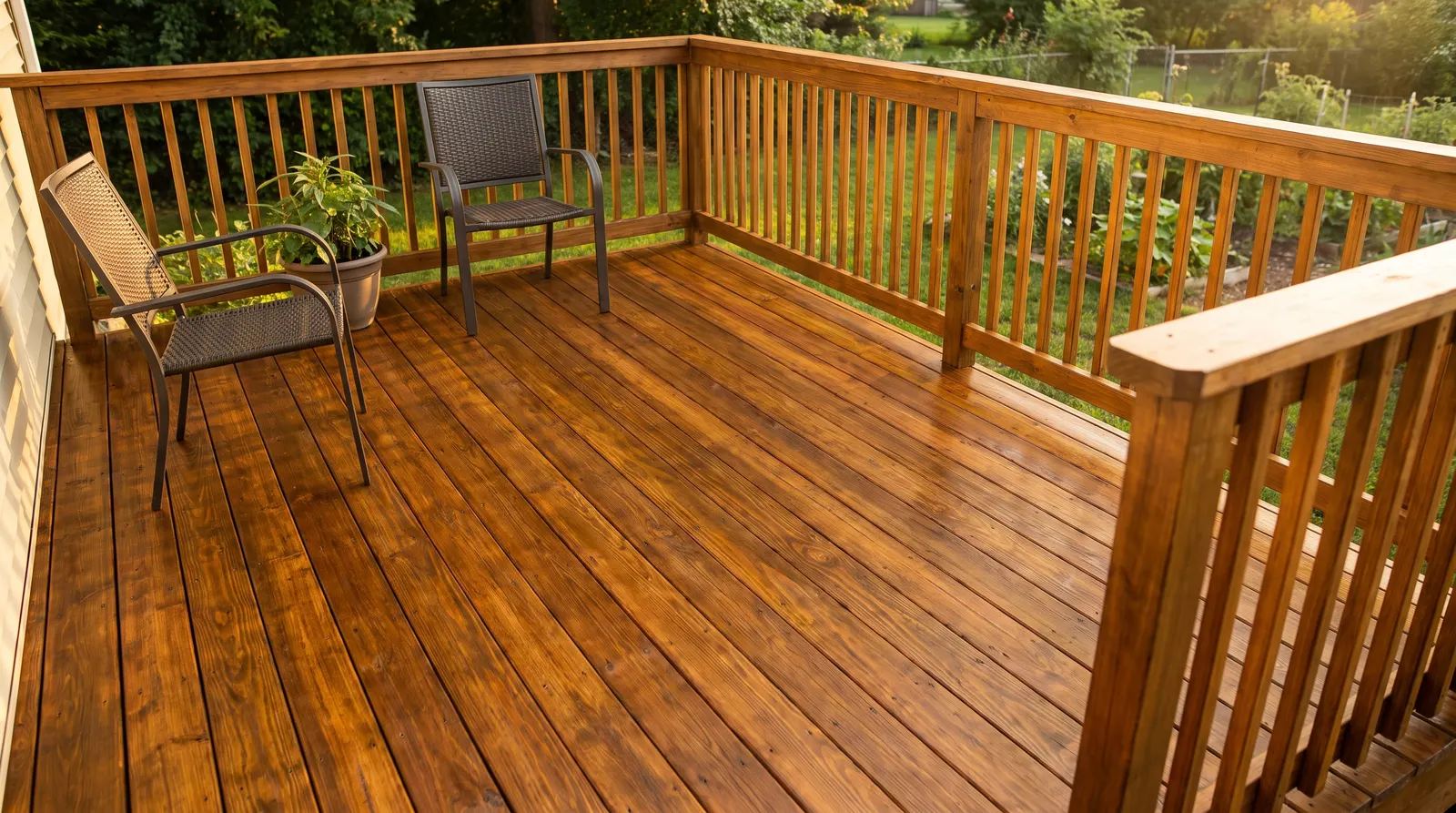
A wood deck in Calgary is a seasonal workhorse. It bakes in strong sun, dries out in our low humidity, soaks up snowmelt and then freezes again overnight. All of that happens within a few months. If you have been wondering when to stain your deck and how often you should redo it, the answer starts with understanding what our climate does to wood.
What Calgary does to a deck
- Sun at altitude. There is less atmosphere to filter ultraviolet light here, so unprotected wood greys and dries faster. Boards that face south or west take the most punishment.
- Dry air. Low humidity pulls moisture out of wood and encourages checking, which are the small splits along the grain.
- Freeze-thaw. Water enters cracks and end grain, freezes, expands and breaks the surface apart. Stain that has worn thin lets more water in.
- Sudden swings. Chinooks and cold snaps flex the wood repeatedly, which stresses any film finish.
When to stain: the signs
Calendar rules are rough. Use the deck itself as the guide. Here are the signs it is time:
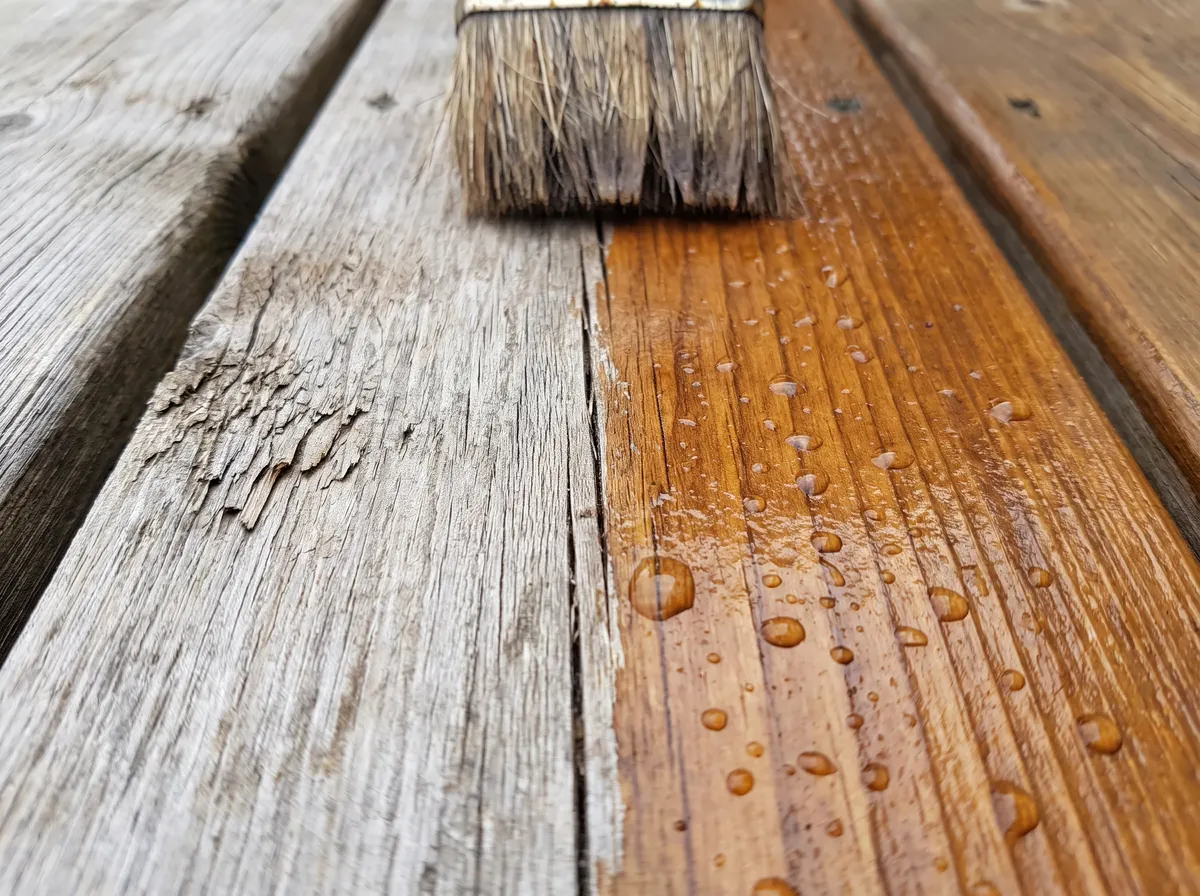
- Water soaks in rather than beading. Sprinkle some water on the boards. If it darkens the wood within a few minutes, the finish is no longer repelling water.
- Colour has faded or gone uneven, especially on sun-facing boards.
- The wood looks silvery grey or dry.
- The old finish is peeling, flaking or worn through along walking paths and around railings.
- Raised grain or small splinters are starting to show.
How often should you redo it?
There is no single number. How long a stain lasts depends on the type of stain, how well the wood was prepped, how much sun and weather the deck gets, and how much it is walked on. As general guidance, transparent and semi-transparent stains show wear sooner and usually need refreshing more often than solid stains, which form more of a film but can peel if the prep was poor.
Check the deck every spring. A quick water test and a look at high-traffic areas will tell you if it is time. Refreshing early, before bare wood is exposed, is easier and cheaper in labour than starting from raw, weathered boards.
Stain or paint?
| Stain | Paint | |
|---|---|---|
| Look | Wood grain stays visible | Solid colour hides the grain |
| How it works | Soaks into the wood | Forms a film on top of the wood |
| Wear pattern | Fades and thins gradually | Can peel or chip, especially on walking surfaces |
| Re-coating | Often a clean and recoat | Usually needs scraping and sanding back |
| Best for | Decks, railings, fences | Trim, some railings, boards in poor condition |
On horizontal boards that take foot traffic and standing water, stain generally performs better than a thick paint film. Railings and vertical parts can go either way. If the deck is badly weathered and you want a solid colour, a solid-colour stain can be a middle path. We can talk through which fits your deck when you send a photo.
Prep: the part that decides how long it lasts
- 1Inspect and repair. Replace or secure loose, split or rotted boards and protruding fasteners first.
- 2Clean. Remove dirt, mildew and old, loose finish. Use a deck cleaner, and pressure wash with care so the wood is not furred or damaged.
- 3Strip if needed. If the old finish is peeling or incompatible, it has to come off.
- 4Brighten and neutralise. Wood that has greyed usually needs brightening to restore its colour before stain goes on.
- 5Let it dry. Wood needs to be dry before staining. After washing, many painters allow at least a couple of days of dry weather, longer for thick or shaded boards. Most stain makers say the wood should be dry to the touch with a low moisture content.
- 6Sand lightly. A light sanding opens the grain so stain soaks in evenly and smooths any raised fibres.
Weather and timing for deck staining
Stain needs the right conditions to soak in and cure. Most stain makers specify a temperature range of roughly 10 to 30 degrees C for application, with dry weather during application and for the first day or two afterward. Check the can for your product.
- Avoid direct hot sun on the boards. Stain can dry too fast on the surface and leave lap marks.
- Avoid dew and evening dampness. Stop early enough in the day for the coat to settle.
- Skip days with rain in the forecast. Fresh stain can streak or wash off.
- Watch overnight lows. Cold nights slow curing and can leave a tacky finish.
- Stain only the right amount. Over-applying leaves a sticky surface that does not dry. Work in sections and wipe off excess.
In Calgary, late spring through early autumn is the usual window, as long as the wood is dry and the weather is steady. New pressure-treated lumber often holds a lot of moisture, so it commonly needs weeks to dry before it takes stain. Many people do the water test: if droplets soak in, the wood can take a finish.
A quick drop test
Sprinkle a few drops of water on a bare board. If they bead, the wood is still too wet or sealed, so wait. If they soak in within a few minutes, the wood is ready to take stain.
Common deck staining mistakes
- Staining over a damp deck.
- Skipping cleaning and old-finish removal.
- Applying stain in hot, direct sun.
- Applying too much stain and leaving puddles.
- Painting or staining only the top of the boards and leaving end grain bare, where water gets in.
- Ignoring loose boards and nails until after the stain is on.
Get your deck done properly
Staining is simple to describe and easy to get wrong, because the prep is most of the work. We handle deck staining as a service, including railings, and we take the same prep-first approach we use on every job. If you also want the house painted, see exterior painting, since doing the siding and deck in the same visit makes sense. We work across the whole city, see our Calgary service area page.
Send a photo of your deck
A couple of clear pictures is usually enough for a free estimate. Call (403) 973-7929 or send them through our contact page. We call back within the hour, 8 am to 8 pm, Monday to Sunday.
Ready to get started? Head to our contact page.